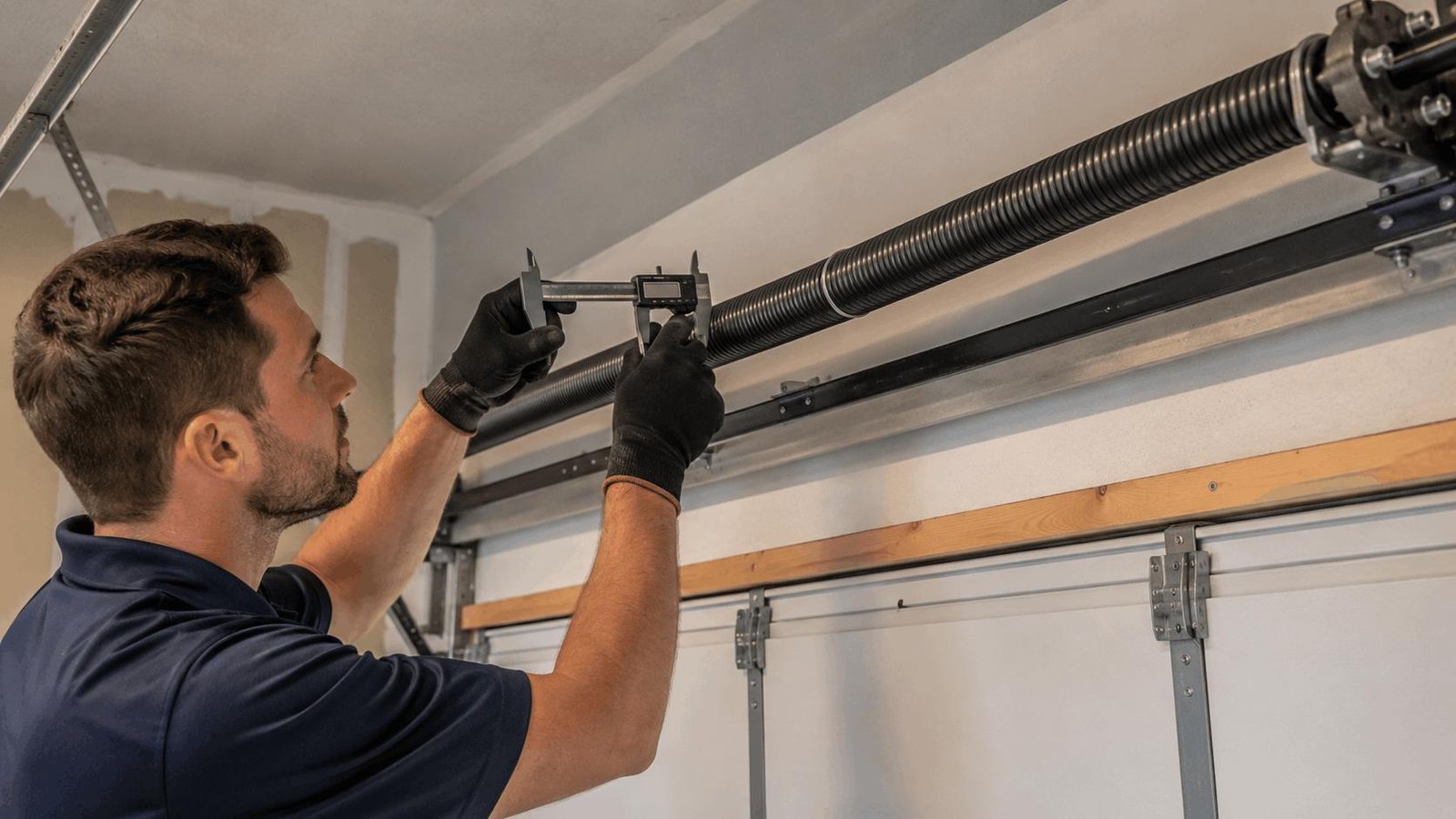

A garage door that suddenly refuses to open can be frustrating, especially when the problem appears without warning. One of the most common reasons a garage door becomes difficult or impossible to operate is a broken garage door spring.
Garage door springs play an important role in helping support the weight of the door during opening and closing. When a spring breaks, the door may become extremely heavy, uneven, or completely unable to move normally.
Understanding the warning signs can help you recognize a spring problem and know when professional service is needed.
What Does a Garage Door Spring Do?
Garage doors are heavy, and the springs help counterbalance much of that weight. Depending on the garage door system, the door may use torsion springs or extension springs.
When the springs are functioning correctly, they help the door move smoothly and reduce the amount of force required to open and close it.
When a spring becomes damaged or breaks, the balance of the garage door can change significantly.
Signs Your Garage Door Spring May Be Broken
1. The Garage Door Will Not Open
One of the most obvious signs is a garage door that will not open properly.
You may hear the opener operating, but the door itself may stay in place or move only slightly. A broken spring can prevent the opener from safely lifting the door.
2. The Door Feels Extremely Heavy
If you disconnect the automatic opener and the garage door suddenly feels much heavier than normal, there may be a problem with the spring system.
Garage door springs help offset the weight of the door. Without that assistance, manually lifting the door can become difficult.
3. You Hear a Loud Bang
A broken spring can sometimes make a loud popping or snapping sound when it fails.
Homeowners may initially think something has fallen inside the garage. In some cases, the sound is the spring releasing its stored tension.
4. You Can See a Gap in the Spring
With a torsion spring, a visible separation or gap in the coil can indicate that the spring has broken.
However, garage door springs are under significant tension, so you should avoid touching, adjusting, or attempting to remove a damaged spring yourself.
5. The Door Opens Unevenly
A damaged spring system can cause the garage door to become unbalanced.
The door may appear crooked, move unevenly, or struggle during operation.
6. The Garage Door Closes Too Quickly
Changes in spring tension can affect how the door behaves when opening and closing.
If the door suddenly moves differently from normal, it is worth having the spring system inspected.
Why Do Garage Door Springs Break?
Garage door springs are mechanical components that experience repeated movement every time the door is operated.
Over time, normal use can cause wear. Other factors can also contribute to spring problems, including:
- Repeated opening and closing
- General spring wear
- Incorrect spring adjustment
- Corrosion or deterioration
- Problems with the garage door balance
- Damage to other components
A spring can eventually lose its ability to properly support the door.
Can You Still Use the Garage Door With a Broken Spring?
It is generally best not to continue operating a garage door when you suspect a spring has broken.
The garage door opener is not designed to compensate for every spring-related problem. Continuing to operate the door may place additional strain on the opener and other components.
More importantly, garage door springs store significant mechanical energy. Attempting to repair or replace them without the appropriate knowledge and equipment can be dangerous.
Torsion Springs vs. Extension Springs
Garage doors commonly use two main types of spring systems.
Torsion Springs
Torsion springs are generally positioned above the garage door opening. They use twisting force to help balance the door.
A broken torsion spring may show a visible gap in the coil.
Extension Springs
Extension springs are typically positioned alongside the horizontal tracks.
They stretch and contract as the garage door moves.
The correct replacement spring depends on the garage door system and its requirements.
Should You Replace a Broken Spring Yourself?
Garage door spring replacement is not a typical DIY maintenance task.
Springs can hold considerable stored tension, and incorrect installation or adjustment can create serious safety risks.
Instead of trying to remove or adjust a spring yourself, professional inspection and service can help identify the correct spring and the appropriate repair.
What Happens During a Spring Repair?
A spring-focused service generally begins with an inspection of the garage door and spring system.
The technician can assess:
- The type of spring system
- The condition of the existing spring
- The balance of the garage door
- Related hardware
- The appropriate repair or replacement
The goal is to address the spring problem while ensuring the garage door system can operate properly.
When Should You Call for Garage Door Spring Service?
Consider requesting professional service if:
- Your garage door will not open
- You hear a loud bang from the garage
- A spring appears broken
- The door feels unusually heavy
- The door is crooked or unbalanced
- The garage door is moving differently than normal
- You notice visible damage to a spring
Early attention can help you understand the problem before additional components are affected.
Professional Garage Door Spring Repair
A broken spring can bring your garage door to a stop, but the problem is often identifiable through a proper inspection.
At Spring Garage Door Repair, our focus is specifically on garage door spring-related services, including broken spring repair, torsion spring replacement, extension spring replacement, spring adjustments, and inspections.
If you suspect a problem with your garage door spring, request a call to discuss the issue and determine the appropriate next step.